Sell a Used Ceiling Fan Online: Condition, Parts and Pickup
Show which parts belong to each fan, what you observed when it last ran and who will arrange proper removal.

Content Writer
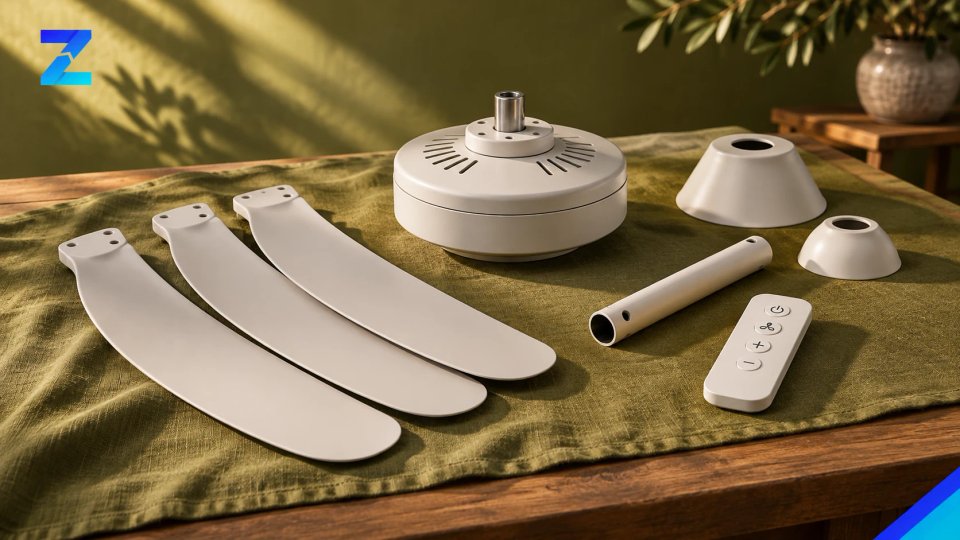
To sell a used ceiling fan, state whether it is installed or removed and when it last ran. Show the exact model, matching blades, remote or regulator and included fittings. Keep each fan's parts together in a lot. Use a qualified electrician for removal, assessment and installation.
A renovation can leave you with one spare ceiling fan or a whole row of them. Before advertising, connect each fan to its own parts and condition note. A buyer needs to know whether it is still installed, when it last ran and whether the remote, blades and mounting parts in the photo belong to it.
Say whether the fan is installed or removed#
An installed fan may be available to see running before an electrician removes it. An already removed fan needs a different description. Write when it last worked and whether anyone has checked it since removal. If it has been in storage, say how long as best you know.
Use a qualified electrician for removal, installation and any condition assessment that needs electrical access. Agree who arranges and pays for that work before the buyer books collection. A sales visit should have a clear plan for who will take the fan down.
Identify the model and describe what you noticed#
Copy the brand, full model and sweep size from the label or reliable model information. State whether it is a conventional or BLDC model if you can confirm that. Ask an electrician or the maker when you are unsure about its control requirements. A remote-controlled model may need a particular remote or controller, and an old regulator cannot be assumed suitable for every replacement fan.
Describe known noise, wobble, uneven speeds, starting difficulty or intermittent operation. Write what happened, such as “Speed changed normally with this remote when last used” or “It hummed but sometimes would not start.” Avoid attaching a guessed cheap repair to that description. Show visible rust, cracks or bent blades and say what service or repair you know about.
Demonstrate only in an appropriate installation#
If the fan is still safely installed, agree what the buyer can observe before removal. A short video can show what you saw at that time. Record the date and which controls you used. It leaves questions about mounting, wiring and future reliability for an appropriate assessment.
Leave a loose or removed ceiling fan unpowered. A temporary connection on a table, an exposed wire or someone holding a running motor is unsuitable for a sales demonstration. Keep away from moving blades and have the electrician handle safe access and isolation for label photos or removal.
Count the pieces for that exact fan#
Lay out removed parts for a photograph only after suitable removal. List the motor, matching blades, downrod, canopies and any fittings actually included. Photograph a remote or regulator separately and say whether it was used with this fan. If a part is missing or you cannot confirm it belongs to the model, write that clearly. Ask the electrician which existing mounting parts can be reused.
For a lot, give each fan a simple label and keep its blades and fittings together. For example, your note might say “Fan A, last seen running before removal, remote included” and “Fan B, stored since removal, no recent test, regulator excluded.” Use your own facts and attach the label to the right group in the photos. A mixed bag of screws should stay described as mixed until somebody checks it.
Set a price for each offer#
Compare fan listings with similar models, condition and contents. A complete recently observed setup, a removed untested fan and a unit with a known fault are different offers. Check the current new price where the model is still available and get an assessment before allowing for an uncertain repair. The pricing guide can help you compare asking prices.
For several fans, state the quantity, price per fan or price for the whole lot, and whether a buyer may take individual units. If one sells, update the list and photos. Keep optional remotes or other separately priced parts clear.
Put the ad up with a collection plan#
Post your ceiling fan on Zutilo. Give the model, installation status, known condition, included parts, asking price and pickup area. Free posting is available within the current category allowance. Agree the inspection and electrician arrangements, confirm payment in your own account and pack the removed blades and fittings so they stay with the right unit. Follow the safety guidance for the meeting.
Looking to sell something?
Reach local buyers with clear photos, condition, price and location. Free posting is available within category allowances; any applicable charge appears during posting.
Post your ceiling fan adBrowse related listings
Quick shortcutsFrequently Asked Questions
4 questionsState when it last ran and whether it has been checked since removal. Keep it unpowered until a qualified person has assessed and installed it appropriately.
List exactly what you provide and whether it was used with that model. Confirm the model's control requirements with the manufacturer or electrician.
Give each fan a label, its condition and parts. State the per-piece or lot price, whether individual sales are allowed and how many remain.
Agree who books and pays a qualified electrician. Use proper removal and model-specific installation instead of an improvised sales demonstration.