How to Buy a Used AC or Air Cooler in Gujarat
Know what to ask about an installed or removed AC, how to inspect a water-based cooler and what to include in the total cost.

Content Writer
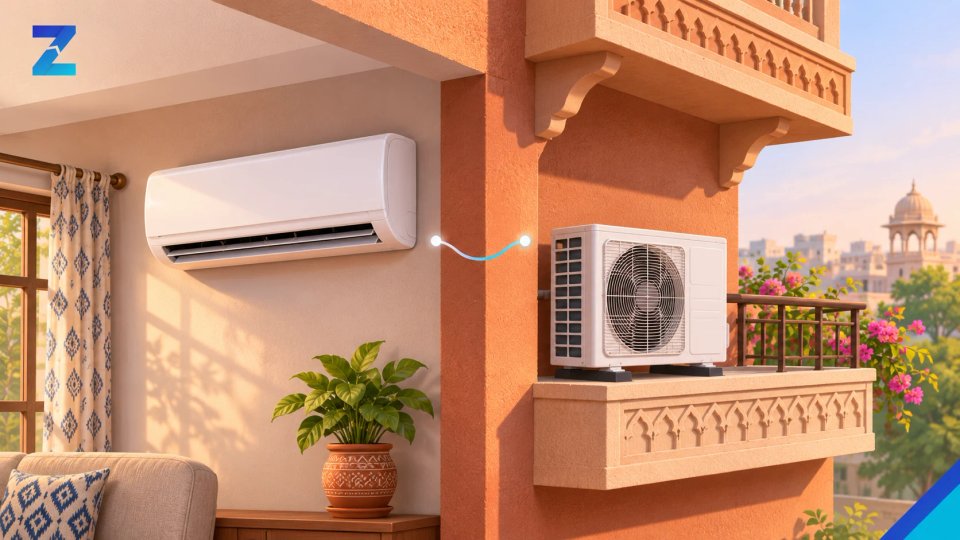
Before buying a used split AC, get the indoor and outdoor model labels and have a qualified installer confirm the pair and your site. Watch normal cooling while it is installed if possible, then compare removal, transport, parts and installation costs. For a water-based cooler, check the tank, pads, fan and pump separately.
A low price on a used AC can look different once you add removal, transport, a new bracket and fitting at your place. First see what can be tested. Then ask for the cost of getting the actual unit running in your room. For a water-based cooler, check the water system and air movement separately.
Start by confirming which appliance suits your room. A compressor AC and a water-based air cooler work differently. Do not buy an “AC type cooler” expecting it to behave like an air conditioner.
Check the room and the exact model#
Note your space, available power arrangement and where the appliance would go. A split AC needs suitable indoor and outdoor placement. A window AC needs an appropriate opening and support. Have a qualified installer assess suitability where needed.
For an air cooler, consider space, ventilation and your conditions of use. Ask the manufacturer or a suitable professional about the model’s requirements rather than choosing only by a tank-size claim.
Browse AC and air cooler listings, then shortlist the exact type, capacity, condition and location you want. Ask for the model label and photos of the actual item, not just a brochure picture.
Ask about use and repairs before travelling#
Confirm approximate age, last use, service history and why it is being sold. For an AC, ask about refrigerant refills, cooling faults, compressor work, leaks and error messages. For a cooler, ask about pump or motor replacement, tank leaks and pad changes.
Find out whether an AC is installed and can be demonstrated. An already removed unit may not offer a normal cooling test at pickup; account for that uncertainty before visiting.
Before travelling, ask: “Is the AC still fitted? Can I see it cooling normally? Can you send the indoor and outdoor labels and tell me what pipe, bracket and remote come with it?” If it is already removed, ask when and why it was taken down and what was working at that point. A seller's old video cannot confirm the unit works today.
Agree that you can inspect the item and which test is practical. A refusal or pressure to pay before inspection is a reason to pause, not an invitation to shorten your checks.
Check the AC while it is installed if possible
Match the model to the ad. For a split AC, ask for clear photos of both model labels and let a qualified installer confirm the indoor and outdoor units are an appropriate pair. Their model codes need not be identical. Look only at accessible casing, filters and cable condition. Leave covers and electrical parts to a technician.
During a normal working demonstration, observe cooling, controls, remote, display, airflow and unusual sounds or water leakage. Allow a suitable demonstration according to the model’s instructions; a few moments of cool air do not prove its full condition.
Do not assume weak cooling only needs cleaning or a gas refill. Ask a suitable technician to assess abnormal cooling, repeated faults, leaks, damaged wiring or uncertain installation. A seller’s explanation and a visual check are not a substitute for that assessment.
For an already removed AC, record which functions cannot be checked. Ask a qualified technician what can be assessed before purchase and what can only be seen after proper installation. If the seller cannot arrange a suitable demonstration or you cannot accept that uncertainty, keep looking.
Inspect an air cooler separately#
Check the tank, drain area, body, wheels, controls and safely visible pad condition. Look for cracks, corrosion, leakage, damaged parts and a cable that needs attention. Ask whether all intended covers and guards are fitted.
Have the seller demonstrate normal operation according to the instructions, including the water system where appropriate. Observe the fan speeds, pump operation and whether water reaches the intended pads. Do not run the pump or fan outside the conditions allowed by the manufacturer.
Notice unusual noise, smell, vibration or a drop in speed. If a safety concern appears, stop rather than testing longer to find the cause. Pad replacement or cleaning costs may matter, but do not assume every problem is minor.
Count the parts and compare the total cost#
For an AC, confirm the remote, mounting bracket or stand, copper and drain pipes, insulation and any stabilizer included. Do not assume existing installation parts can all be reused at your property; the installer needs to assess that.
For a cooler, confirm pads, wheels, remote and detachable parts. A missing part may need an exact replacement rather than a generic substitute.
Compare AC and cooler listings with the same type, model and condition. For a split AC, compare the purchase price plus inspection, removal, carrying, transport, the new fittings your installer specifies and installation. Keep an unknown repair cost separate. For a cooler, compare the cost of replacing actual missing parts rather than allowing for an AC installation.
Ask for a quote for your site. A seller may include a stand or some pipe, but your installer should confirm which parts can be reused, whether there is suitable outdoor access and where water will drain. Write down who will pay for anything that turns out to be missing.
Agree on removal and pickup before payment#
Use a suitable professional for AC removal, refrigerant handling and installation, following the exact model’s instructions. Agree who appoints the technician, pays the costs and is responsible for the parts handed over. Do not arrange improvised disconnection to save a little on the purchase.
For a cooler, prepare it for transport according to its instructions, including water removal where required. Confirm dimensions, lift or stair access, loading help and vehicle arrangements for either appliance.
The AC and cooler seller guide can help you understand the information to request. Your job as a buyer is to verify the offer and decide whether the total cost and uncertainty suit you.
Make the final decision after the checks#
Record the agreed appliance, accessories, condition, price and pickup plan in writing. Read the marketplace scam checklist and safety guidance before meeting.
Avoid advance pressure and unusual payment steps. If the item cannot be tested adequately or the repair risk is unclear, keep comparing rather than accepting a promise of easy cooling. Choose a deal you understand, with suitable professional help where it matters.
Explore on Zutilo
Browse local listings, compare the details and contact a seller when you find something useful.
Compare used ACs and air coolersBrowse related listings
Quick shortcutsFrequently Asked Questions
5 questionsGet a photo of the model label on both the indoor and outdoor units. Ask a qualified installer to confirm the manufacturer-approved pairing and whether it suits your site.
Watch normal operation if possible and check controls, airflow, noise, leaks and unexpected errors. Cold air for a short period does not settle performance or repair questions.
Look at the tank, drain, pads, wheels, cable and controls. Have the seller show ordinary operation according to the model instructions, including fan speeds and the water pump where appropriate.
Ask the seller and installer separately. Confirm what comes with the unit and get a quote for removal, transport, parts and installation at your place.
You may be unable to observe ordinary cooling before pickup. Ask about removal and prior faults, have a technician check what they can and decide whether the remaining uncertainty fits the offer.