NA Permission in Gujarat: Documents, Charges, Layout Plan & Section 65
Understand Gujarat NA permission: documents, Section 65, layout plan, competent authority, NOCs, premium charges, Sanad and buyer checks before land conversion.

Hetvi Patel
Content Writer

NA permission in Gujarat is official approval to use agricultural land for residential, commercial, industrial or other non-agricultural purposes. Before buying or converting land, check title, 7/12, 8A, zoning, layout plan, required NOCs, premium charges and the final NA order or Sanad.
NA permission in Gujarat is needed when agricultural land will be used for a non-agricultural purpose such as a house, society, shop, warehouse, factory or other development. The process depends on the land location, zoning, authority, documents and the proposed use.
This guide is for landowners, buyers and families who want a practical understanding before buying land, preparing a file or discussing a deal. Always confirm the latest rule, fee and document requirement with the local revenue office and a qualified professional.
Quick answer: what is NA permission in Gujarat?#
NA permission is official approval to convert agricultural land for non-agricultural use. In Gujarat, this is commonly connected with Section 65 of the Gujarat Land Revenue Code. Without proper permission, construction or commercial use on agricultural land can create legal, registration, loan and resale problems.
What is NA land?#
NA land means non-agricultural land. It is land that has been legally approved for a purpose other than agriculture, such as residential, commercial, industrial, institutional or another permitted use.
A land parcel does not become NA only because nearby development has started. The land record, zoning status and final NA order or Sanad matter.
Section 65 and why it matters#
Section 65 is important because agricultural land should not be used for a non-agricultural purpose without permission from the competent authority. The exact file route can change by district, local authority and land-use type, but the buyer should always ask whether NA permission is already granted or still pending.
Common NA use types#
| NA use type | Common purpose |
|---|---|
| Residential NA | House, villa, flats, society, bungalow or residential plotting |
| Commercial NA | Shop, showroom, office, hotel, warehouse or business building |
| Industrial NA | Factory, workshop, industrial shed or manufacturing activity |
| Institutional NA | School, hospital, trust or public-use building |
Residential, commercial and industrial files can have different document checks, NOCs and premium treatment.
Step-by-step NA permission process#
Step 1: Check title and ownership#
Start with the title deed, 7/12 Utara, 8A Khata, Village Form 6 mutation entries and the ownership chain. If the title itself is unclear, the NA file can get delayed or rejected.
Step 2: Check zoning and permitted use#
Confirm whether the proposed use is allowed under the development plan, town planning scheme, local authority rules or zoning. A buyer should not assume that every agricultural land parcel can become residential or commercial NA.
Step 3: Prepare the document file#
The file usually includes ownership papers, identity proofs, title clearance, zoning details, site plan, layout plan and NOCs where required.
Step 4: Submit the NA application#
The landowner or authorized representative submits the application to the competent authority such as the Collector, District Development Officer, Taluka Development Officer or another delegated office depending on the area.
Step 5: Department review and NOCs#
The file may be reviewed by revenue, town planning, panchayat, municipality, irrigation, fire, pollution control or other departments depending on location and proposed use.
Step 6: Site inspection#
Officials may inspect the land to check boundaries, road access, encroachment, nearby public assets, water body or canal proximity and actual land condition.
Step 7: Pay premium and charges#
If approved, the applicant may need to pay NA premium, conversion charges or other government fees. These may depend on land area, Jantri value, location and proposed use.
Step 8: Get NA order or Sanad#
After approval and payment, the competent authority issues the NA order or Sanad. Keep this document safely because buyers, lenders and registration checks may ask for it later.
Documents required for NA permission in Gujarat#
| Document | Why it matters |
|---|---|
| 7/12 Utara | Shows survey number, ownership and agricultural land details |
| 8A Khata | Shows account holder and landholding details |
| Village Form 6 | Shows mutation and ownership history |
| Title deed | Shows transfer and ownership basis |
| Title clearance certificate | Confirms legal title and ownership status |
| Zoning certificate | Confirms whether proposed use is permitted |
| Layout plan or site plan | Shows roads, plots, boundaries and proposed use |
| Identity proof | Aadhaar, PAN or other owner identity documents |
| Tax or no-dues receipts | Shows local dues status where applicable |
| NOCs | Required from relevant departments based on location and use |
| Power of attorney | Required when a representative applies |
The exact document checklist can vary by district, land type and proposed use. Treat this as a practical starting list, not a substitute for the local office checklist.
Who is the competent authority?#
| Area or case | Possible authority |
|---|---|
| Urban or municipal area | Collector or delegated revenue authority |
| Rural or panchayat area | DDO, TDO or delegated authority |
| Development authority area | Planning authority and revenue authority may both be involved |
| Restricted or special land | Collector, state department or special authority |
Before spending on plans and legal work, confirm the correct office for your land parcel. Many delays happen because the file is prepared for the wrong authority or without the right supporting documents.
Layout plan requirements#
A layout plan or site plan is usually required with the NA file. It should normally be prepared by a qualified architect, engineer or surveyor.
The plan may show:
- Survey number and measurements
- Plot boundaries
- Road access and internal roads
- Proposed use
- Open space or common areas
- Utility lines and drainage
- Entry and exit points
- Adjacent land details
If the layout plan is incomplete or does not match land records, the file can face objections.
NOCs that may be required#
Depending on the location and use, NOCs may be needed from town planning, gram panchayat, municipality, irrigation, forest, fire, pollution control, highway or airport authorities.
Industrial, large commercial and sensitive-location files usually need more careful NOC checking than a simple residential case.
NA conversion charges and premium#
NA premium or conversion charges may depend on Jantri value, land area, location, proposed use, residential or commercial category and current government circulars.
For valuation context, read the Gujarat Jantri Rates guide. Jantri value can affect stamp duty, valuation and some government charges linked to land conversion.
How long does NA permission take?#
The timeline depends on document readiness, title clarity, authority review, NOCs, site inspection and premium payment. A clean file can move faster, while missing documents, zoning objections, disputed title or pending NOCs can slow the process.
What if land is used without NA permission?#
Using agricultural land for non-agricultural construction or business without proper permission can lead to legal notice, penalties, regularization issues, demolition risk, building permission delay, registration problems or loan approval difficulty.
Buyer checklist before buying land for NA conversion#
- Check 7/12, 8A and mutation entries.
- Verify title clearance and encumbrance.
- Confirm zoning and development plan status.
- Check road access and survey boundaries.
- Ask whether NA premium or NOCs are pending.
- Confirm whether the buyer is eligible to purchase agricultural land.
- Estimate Jantri value and likely conversion cost impact.
- Avoid paying a large token amount before legal verification.
How Zutilo helps property buyers and sellers#
Zutilo helps you browse land and property listings in Gujarat, compare asking prices and prepare better questions before calling a seller. It does not replace a lawyer, revenue office check or government approval, but it can help you shortlist land more carefully.
Looking to sell something?
Post your free ad in 30 seconds and connect with buyers across Gujarat.
Browse Land & Plots in GujaratLatest Land & Plots ads on Zutilo
Browse verified listings from local sellers in your area.
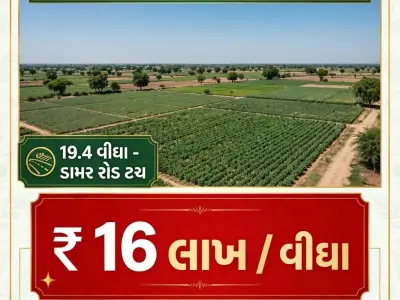 Land & Plots
જમીન
 Land & Plots
6 vigha 2 gutha jamin vahechvani chhe
 Land & Plots
Jamin vechvani che area ranavav taluka vistar gam nerana , areda
 Land & Plots
Agricultural Land Plot with Sowing Done
 Land & Plots
Land Plot Available for Sale
 Land & Plots
Agricultural Land Wanted, 1.5 to 2 Vigha
Explore on Zutilo
Quick shortcutsFrequently Asked Questions
10 Items1What is NA permission in Gujarat?
NA permission is approval from the competent authority to use agricultural land for non-agricultural purposes such as residential, commercial, industrial or institutional development.
2Which law is NA permission commonly connected with in Gujarat?
NA permission is commonly connected with Section 65 of the Gujarat Land Revenue Code, along with applicable revenue, planning and local authority rules.
3Which documents are required for NA permission in Gujarat?
Common documents include 7/12 Utara, 8A Khata, Village Form 6, title deed, title clearance certificate, zoning certificate, layout plan, identity proof and required NOCs.
4Who gives NA permission in Gujarat?
The competent authority can vary by location and land use. It may be the Collector, District Development Officer, Taluka Development Officer or another delegated authority.
5Is a layout plan required for NA permission?
Yes, a layout plan or site plan is usually required. It should normally be prepared by a qualified architect, engineer or surveyor.
6How are NA charges calculated?
NA charges or premium may depend on Jantri value, land area, location, proposed use and government circulars applicable at the time.
7What is Sanad in NA permission?
Sanad is the official document or order that confirms permission to use the land for the approved non-agricultural purpose.
8Can I build on agricultural land without NA permission?
Using agricultural land for non-agricultural construction without permission can create legal notice, penalty, regularization, demolition, loan and registration risks.
9Does NA permission come before building permission?
In most cases, the land use must be legally approved for the proposed non-agricultural purpose before building permission can move ahead.
10Should a buyer check NA status before buying land?
Yes. A buyer should check land records, title, zoning, NA status, pending NOCs and likely conversion charges before paying a large token amount.