Sell Used Farm Equipment: Models, Parts and Pickup
Help a buyer check the exact tractor, pump or implement, what comes with it and whether collection is practical.

Content Writer
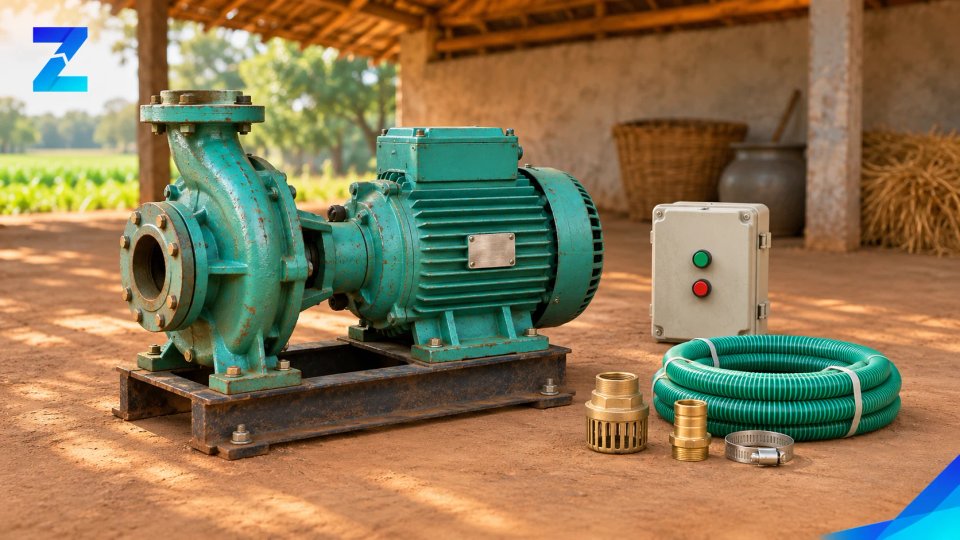
To sell farm equipment, name the exact machine, model and capacity, describe its actual running condition and disclose known repairs. For pumps and motors, copy relevant nameplate values accurately. For tractors and implements, show use, wear and included attachments. Arrange a competent, controlled demonstration and agree on loading, transport, payment and any required transfer checks.
A tractor waiting in a shed, a pump replaced during an upgrade or an unused rotavator may still be useful to another farmer. The next owner needs to know whether it suits their work, what condition it is in and how it can be moved.
To sell used farm equipment, describe the actual machine rather than making a broad “farm machinery available” ad. Clear capacity, repairs and pickup details help a buyer prepare useful questions before visiting your village or yard.
Identify the machine and the complete offer#
Write the type, brand, exact model and approximate age or purchase year. Say whether it is running, stored unused, repair-needed or offered for permitted parts. List the attachments and accessories included in the price.
For example, a tractor with an implement, a pump with a starter and pipes, and a bare motor are different offers. If several pieces are for sale, give clear individual or bundle prices. Do not let one small part’s price stand in for a whole machine.
Give each machine its own offer note. For example: “Pump and motor on the pictured base; starter included, delivery pipe excluded; nameplate photo attached; rewound during my ownership; last used before storage; no recent running test.” Use only facts you know. Separate tested operation from the rated values printed by the maker.
Start with the relevant listings: tractors, pumps and motors or farm implements. Compare equipment with a similar purpose and capacity, not just a similar appearance.
For a tractor, describe use and known work#
Include the model, stated power, fuel type, available meter reading and its known reliability, tyre condition and included attachments. Explain any known engine, clutch, hydraulic, steering or brake concern in ordinary words.
Mention major repairs, service records and how long the tractor has been unused if relevant. Do not call a meter reading verified without evidence. A clean body cannot prove the condition of the engine or other working parts.
State the registration and ownership-document situation accurately and arrange suitable private verification. Check current official requirements for the particular vehicle and transaction instead of assuming a sale receipt completes any required transfer.
For pumps and motors, copy the label carefully#
Photograph the nameplate and write the relevant values that can be read: model, rated power, phase and other specified details. For pumps, add inlet and outlet sizes where known. State whether the starter, cable, pipe fittings or base are included.
Where the plate or manual gives head and discharge, keep their units and model context. These describe different aspects of a pump; horsepower alone does not tell another farmer what it will deliver at their site. A pump specialist should check the buyer’s water level, pipework and electrical supply before anyone promises a fit. If the setup is already removed, say which normal checks are no longer available.
Disclose rewinding, bearing work, leakage, changed components and known faults. Say when it last ran and what it was used for. If a label is unreadable or a value is unknown, say so rather than guessing from the machine’s size.
Do not promise that a motor or pump will suit every supply, bore or irrigation setup. A buyer needs to check compatibility and site requirements with an appropriate professional.
For implements, show size, fit and wear#
For a rotavator, cultivator, sprayer or another implement, give the exact type and working size where known. Show the mounting or connection points and use model documentation for compatibility. A walk-behind power tiller and tractor tyres need their own preparation; use the tiller and tractor-tyre guide for those checks.
Show blades, tines, frame, shafts, guards, tank or nozzles as relevant. Disclose wear, cracks, welding repairs, missing covers and parts needing attention. State which spare parts and attachments come with it.
For powered cutting or processing equipment, a buyer may need an experienced operator or technician to assess it. Do not bypass a guard or improvise a setup for a listing demonstration.
Photograph condition and prepare service information#
Take full front and side views, the model plate and close-ups of wear. Include leaks, rust, repaired sections and accessories. Photograph accessible areas with the machine stopped and made safe according to its instructions; do not reach into moving parts for a better view.
A recent working video can help explain what was observed if recorded safely by a competent person. It does not prove long-term performance or replace an inspection. Keep private details out of service bills and ownership documents shown publicly.
Price against comparable equipment and total pickup cost#
Compare the same model or useful equivalent, capacity, age and actual condition. Repairs, worn tyres or blades, missing starters and transport can affect the buyer’s total cost. Get a suitable repair assessment where necessary instead of promising a fault will be cheap to fix.
The second-hand pricing guide can help organise the comparison. Other ads show asking prices, not confirmed sale values. State whether negotiation is possible after inspection.
Agree on a controlled demo and loading plan#
Confirm the visitor, what can be demonstrated and who will operate the machine. Use a suitable location, competent people and the manufacturer’s instructions. Electrical tests and unfamiliar repairs need appropriate professional help. Do not run damaged or unsafe equipment simply because a buyer asks.
For a pump, ask the qualified person to plan a suitable model-specific setup; briefly powering a removed unit on a dry floor is not a useful pumping test. Keep electrical covers closed for photos. State whether any video shows the previous installation and date, rather than implying it was tested at the current pickup point.
Write the village, taluka, approach-road condition, loading space and whether a suitable vehicle can reach it. Agree who arranges transport, lifting equipment and labour, and who pays. Heavy machinery should not be moved with an improvised loading arrangement.
Complete the local handover clearly#
Confirm the machine, attachments, condition and price in writing. Follow Zutilo’s safety guidance and verify payment in your own account before handover. Continue any agreed official document process through completion.
Ready to sell? Post your farm equipment ad. Free posting is available within category allowances; see the current posting limits. Specific capacity and a realistic collection plan make the listing easier for a suitable local buyer to consider.
Looking to sell something?
Reach local buyers with clear photos, condition, price and location. Free posting is available within category allowances; any applicable charge appears during posting.
List your farm equipmentBrowse related listings
Quick shortcutsFrequently Asked Questions
4 questionsCopy the readable model and relevant nameplate values accurately. Include known repairs, last use, included starter or fittings, and any fault. Say when a value is unknown.
Describe the repair-needed condition clearly. Do not call it fully working or promise an unassessed fault is inexpensive to fix.
Use a competent operator and the manufacturer’s instructions in a suitable setting. Arrange professional help for electrical checks or unfamiliar machinery, and do not bypass guards.
Agree before the visit or collection. Confirm vehicle access, suitable lifting help, labour, costs and what is included in the price. Do not assume the buyer or seller provides everything.