NA Land Conversion Process Gujarat | Agricultural to Residential
Learn the step-by-step legal process to convert agricultural land to NA (Non-Agricultural) residential or commercial property in Gujarat.

Hetvi Patel
Content Writer
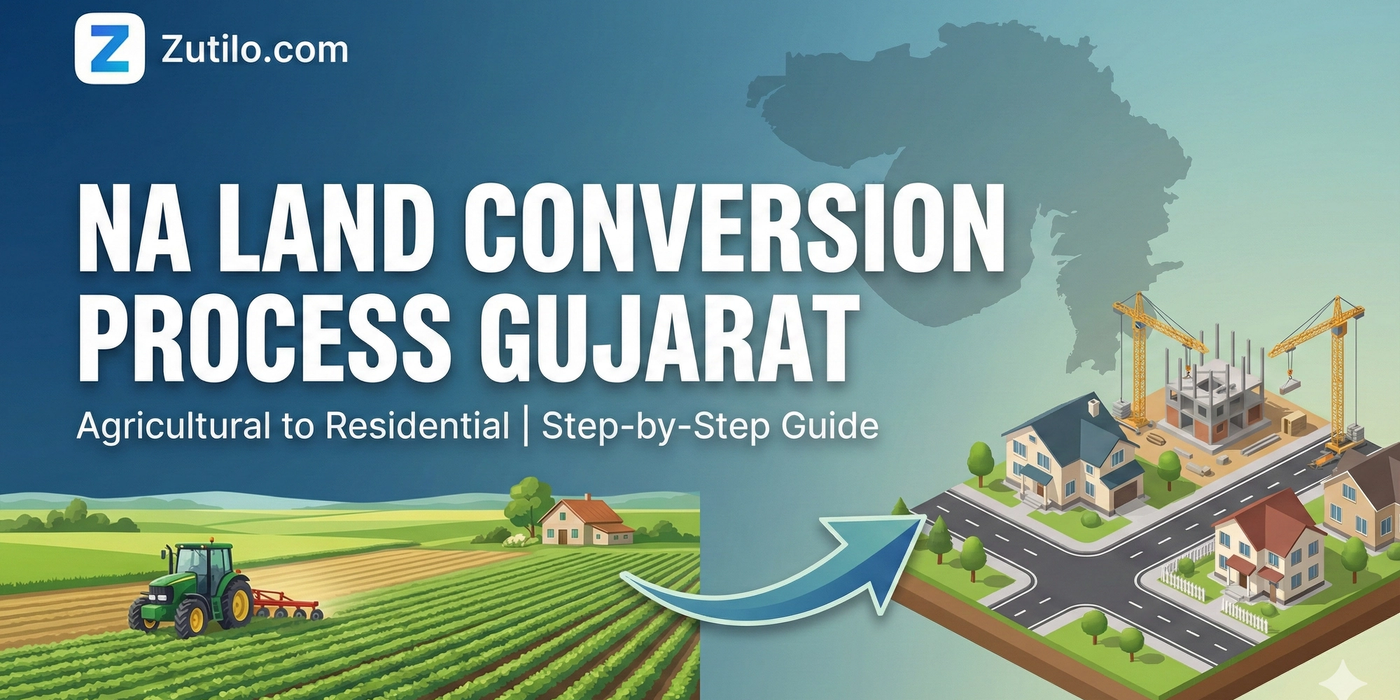
For high-net-worth investors and commercial developers, one of the most lucrative strategies to maximize real estate value is converting agricultural land into commercial or residential plots. However, transforming agricultural land into a Non-Agricultural (NA) parcel in Gujarat involves navigating a legally complex framework.
If you are eyeing a prime parcel of land on Zutilo with massive development potential, understanding the legalities under the Gujarat Land Revenue Code is your crucial first step.
The Legal Framework: Section 65#
Under Section 65 of the Gujarat Land Revenue Code, any agricultural landowner who wishes to use their land for non-agricultural purposes (like building a housing society, an industrial shed, or a commercial complex) must obtain official permission from the District Collector or the designated competent authority. Converting land without this approval is illegal and can lead to heavy penalties or demolition.
Step-by-Step NA Conversion Process#
The conversion process requires patience and strict adherence to government protocols. Here is how it works:
1. Drafting the Application: The landowner must submit a formal application to the District Collector's office or the Taluka Development Officer (TDO), depending on the land's jurisdiction.
2. Acquiring Crucial NOCs: This is the most time-consuming step. You must obtain No Objection Certificates (NOCs) from various departments to prove the new development will not cause administrative or environmental issues.
Key NOCs include:
- Town Planning Department: To ensure the proposed use aligns with the local master plan.
- Pollution Control Board: Mandatory for industrial or large commercial NA conversions.
- Other Authorities: Depending on the location, you may need clearance from the irrigation department, forestry department, or local gram panchayat.
3. Paying the Premium: Once the documents and NOCs are verified, the authorities will calculate the conversion charges or 'premium' based on the prevailing Jantri rates and the intended NA purpose (residential is usually cheaper than commercial).
4. Receiving the NA Order: After the fees are paid, the Collector issues the official NA Order, legally changing the land's status.
Essential Document Checklist#
Ensure you have a complete dossier before approaching the Collector's office. You will need:
- Original 7/12 (Utara) and 8A (Khata) extracts.
- Village Form No. 6 (Hak Patrak) showing the history of land rights.
- A certified Title Clearance Certificate from an advocate.
- A proposed layout/site plan drafted by a certified architect or surveyor.
- Identity proofs of the current landowner(s).
Find High-Potential Land on Zutilo#
The NA conversion process can be rigorous, but the financial upside is massive. On Zutilo.com, developers and investors can discover premium agricultural parcels situated in high-growth corridors across Gujarat, perfect for future commercial or residential projects.
Explore on Zutilo
Quick shortcutsFrequently Asked Questions
2 Items1What is the main law governing NA conversion in Gujarat?
Section 65 of the Gujarat Land Revenue Code governs the conversion of agricultural land to non-agricultural purposes.
2Is it mandatory to obtain NOCs for NA conversion?
Yes, No Objection Certificates (NOCs) from various departments like Town Planning and Pollution Control Board are crucial to ensure the development does not cause administrative or environmental issues.